
Physical damage, financial pressure:
How the cost of capital is reshaping renewables claims
By Dalraj Dhillon & Adam Humphrey

Higher interest rates have changed more than the value of renewable assets. They have changed the financial environment in which a claim arises. For insurers, reinsurers, and brokers, understanding the capital structure behind a renewable asset is fast becoming as important as understanding the asset and the damage itself.
Renewable energy assets have long been seen as stable, infrastructure-style investments: long-duration cash flows, inflation-linked revenues, and an essential role in the energy transition.
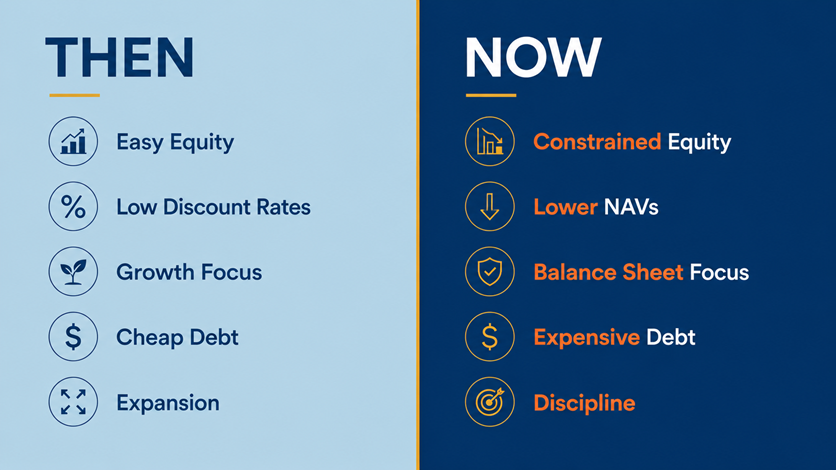
For many listed renewables investment trusts, that model worked well while rates stayed low. Predictable revenues supported dividends. Lower discount rates lifted portfolio valuations. Buoyant equity markets enabled trusts to raise capital, acquire assets, and grow.
That environment has changed. The Times report (17 June), “New blow for investors as green energy trust begins wind-down”, sets out the challenges now facing the SDCL Energy Efficiency Income Trust, which are common to the broader sector.
Rising rates have not only cut the value of renewable assets; they have exposed the financial structures behind them. Gearing, discount rates, valuations, and access to capital are all far more visible than they were. That matters to insurers, reinsurers, and brokers because the financial context in which a loss occurs now shapes how a claim is presented, managed, and resolved.
In this environment, a renewables loss is rarely just a physical-damage event. It can quickly become an event involving financing, cash flow, valuation, and stakeholder management.
What higher interest rates do to an investment trust
Listed renewable energy trusts are typically long-term owners of operational assets; wind, solar, battery storage, and related infrastructure. Their value is tied closely to the future cash flows those assets are expected to generate.
When interest rates rise, several things happen at once.
1. Discount rates rise.
Renewable assets are valued based on their future cash flows, so when the discount rate rises, the present value of the asset falls.
2. Gearing becomes more visible.
Even where debt has not increased, falling asset values make leverage ratios look more stretched. Debt that seemed efficient at low rates becomes a constraint as values soften and refinancing costs climb.
3. Equity markets turn less supportive.
Where trusts trade at material discounts to net asset value, raising new equity is hard. That limits their ability to grow, recycle capital, fund new assets, or respond flexibly to portfolio needs.
4. Capital allocation shifts.
Trusts that once chased growth must now prioritise debt reduction, asset disposals, dividend cover, buybacks, and balance-sheet discipline.
This is the backdrop against which renewable asset owners now manage both portfolio performance and operational losses, including claims.
From growth capital to balance-sheet discipline
The renewables sector has not lost its appeal. Important milestones are still being passed, see Complex Claims International’s “Wind and Solar Overtake Gas: A Milestone, and a Signal for Insurers” (10 June 2026). The need for clean energy infrastructure is as strong as ever. However, the capital environment is, for now, far less forgiving.
In the last cycle, many renewable vehicles funded growth through a mix of asset-level debt, corporate facilities, and new equity. Today the equation is different: higher rates raise the cost of debt, lower NAVs reduce flexibility, and wide share-price discounts make equity issuance unattractive or impractical. The result is a shift from expansion to discipline.
That matters to insurers because an insured's financial position shapes the dynamics of a claim. An owner under pressure to preserve cash, protect lender relationships, or sustain dividends may pursue recovery with real urgency. That urgency is commercially understandable, but it still must be tested against the policy.
Why this affects the claim
The market should be alert to this mindset shift: higher interest rates and tighter gearing change how asset owners behave after a loss. A damaged turbine, solar array or battery storage system may follow the same technical repair path as before, but the commercial consequences of delay are now more pronounced and increasingly front of mind.
The claim may involve physical damage. It may also involve business interruption, debt-service pressure, contractual obligations, delayed reinstatement, OEM constraints, lender reporting, refinancing concerns, and investor scrutiny. The risk is that these strands blend.
At the time of a claim, our task is often to separate these strands, and drawing those lines clearly is becoming central to renewable energy claims.
Business interruption now bites harder
Renewable assets generate revenue. Downtime matters.
At low interest rates, the lost generation was painful but manageable. At higher rates, the same interruption hits harder, particularly where projects face debt-service obligations, merchant exposure, refinancing pressure, or constrained access to capital. To address this, business interruption and delay-in-start-up analysis need to start early. Critical issues could include:
· What is the insured revenue model?
· Is revenue merchant, subsidised, contracted, or hybrid?
· Is there a PPA, CfD, ROC, FIT, or other support mechanism?
· What is the actual loss of generation?
· What is the appropriate benchmark period?
· Is the loss caused by insured damage, grid constraint, market conditions, or operational underperformance?
· What mitigation was available?
· What is the period of indemnity?
· Are claimed losses properly attributable to the insured event?
Mitigation gets more financially charged
Balance-sheet pressure can also shape mitigation decisions.
An insured may accelerate repairs, buy replacement parts at a premium, hire temporary equipment, pay overtime, charter specialist logistics, or adopt an expedited reinstatement strategy. Often, that is reasonable, and it can reduce the overall insured loss. Insurers may even be asked to fund these measures early, which, handled well, can benefit everyone by limiting the event's total financial impact.
But the economics need testing, and adjusters need tools to support real-time decision-making. That calls for a blend of policy, commercial and technical expertise — time, cost and engineering — and an acceptance that ‘waiting for the insured to present a claim’ is no longer fit for purpose.
There may be an opportunity to mitigate a loss to ‘insured’ generation revenue. But there may also be pressure to protect NAV, satisfy lenders, avoid covenant breaches, sustain dividends, or reassure investors. Those pressures are real, but they are not necessarily insured.
Valuation disputes get sharper
Higher interest rates also increase the risk of valuation disputes.
A renewable asset can be valued in several ways: reinstatement value, depreciated value, market value, accounting carrying value, project-finance value, and the net asset value used for investment reporting. Those numbers may not align.
In a total-loss or major partial-loss scenario, the valuation basis needs scrutiny. A damaged asset's technical replacement cost may differ markedly from its market value. A repair proposal may carry betterment, life extension, repowering, or a performance upgrade. A replacement component may not be like-for-like because the original is obsolete or no longer supported.
At higher rates, these questions become sharper because the relationship between the physical reinstatement cost and the financial asset's value is under strain.
Insurers should be cautious about accepting a valuation narrative without testing the underlying basis.
More stakeholders, more pressure
Renewable energy claims typically involve multiple stakeholders: the project company, asset manager, fund manager, lenders, brokers, insurers, reinsurers, OEMs, EPC contractors, O&M providers, off-takers, grid counterparties, and investors. Where the asset sits inside a listed or leveraged structure, that stakeholder map matters even more.
A material loss may affect:
project cash flow
lender reporting
covenant headroom
dividend cover
refinancing assumptions
asset disposal plans
investor communications
portfolio valuation
and future capital allocation
These issues shape how the claim is presented and negotiated.
Early stakeholder mapping is therefore essential. It shows who is driving the claim, who controls the technical response, who carries the financial exposure, and where recoveries may lie.
The line between insured loss and capital-market stress
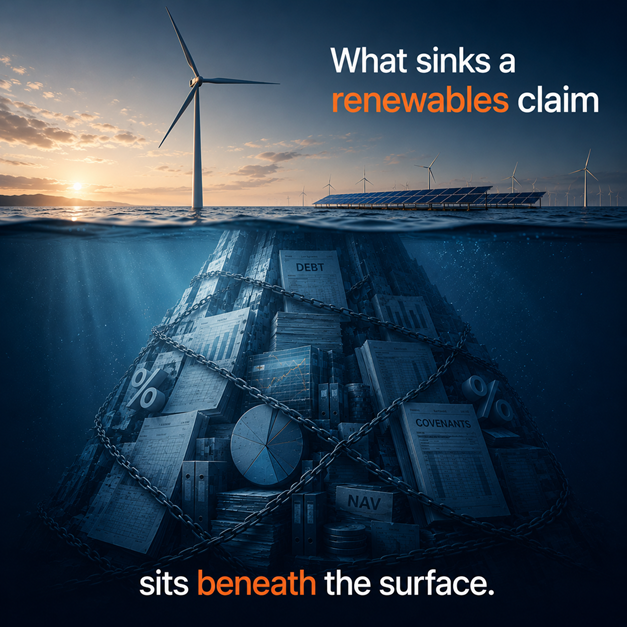
One of the most important questions is where insured loss ends and wider capital-market stress begins. Higher rates, falling NAVs, wider discounts and refinancing pressure may all be commercially significant. But not every commercial consequence is an insured one.
A policy may respond to physical damage, business interruption, delay in start-up, increased cost of working, or other defined heads of loss. It will not necessarily respond to lost market value, dented investor confidence, higher financing costs, or wider portfolio pressure. That does not make these issues irrelevant. They may explain the insured's behaviour, influence mitigation, affect settlement dynamics, and create urgency around reinstatement.
In assessing this, insurers should be clear about causation:
What loss flows from insured damage, and what loss flows from market conditions, financing structure, or pre-existing commercial pressure?
That question belongs at the start of a claim, not the end.
What to do differently from day one
This environment calls for a more integrated approach. At the outset of any significant renewables loss, insurers should:
Map the insured asset and revenue model
Understand how the asset earns revenue, which contracts apply, what subsidies or support mechanisms exist, and how generation income is calculated.
Identify the financial structure
Establish whether the asset is project-financed, portfolio-financed, held by a listed trust, subject to lender controls, or exposed to refinancing pressure.
Separate technical damage from financial consequences
Pin down the physical damage, the repair scope, and the causal link between damage, downtime, and financial loss.
Test the BI or DSU model early
Interrogate generation data, pricing assumptions, benchmark periods, curtailment, availability, degradation, grid constraints, and contractual revenues.
Pressure-test mitigation costs early
Assess in real time whether accelerated costs are reasonable and genuinely reduce an insured loss — rather than simply responding to wider commercial pressure.
Review betterment and upgrade issues
Check whether proposed works include technology improvements, life extensions, repowering, performance gains, or deferred maintenance.
Identify recovery routes
Review OEM warranties, EPC obligations, O&M responsibilities, performance guarantees, serial-defect issues, and contractual indemnities.
Manage stakeholder communication
Set a clear claims roadmap with agreed information requirements, defined workstreams, and transparent reporting to insurers and reinsurers.
The lesson for the market
The renewables sector is operating in a different capital environment, and this is affecting owners today. Higher rates have reshaped asset values, gearing, equity market access, and investor sentiment. Those pressures do not automatically increase insured losses, but they change the context in which every claim arises. The lesson is not to treat renewable energy losses as purely technical events.
The physical damage matters. So do the revenue model, the financing structure, the reinstatement strategy, the mitigation economics, and the stakeholder environment.
In renewables, the damage may be physical, but the loss is increasingly financial.
Evidence. Insight. Better Outcomes. Better outcomes start with good decisions, and good decisions depend on clear, reliable information. Early engagement, expertise-led insights, and a shared understanding of the facts and issues help align expectations and support better decisions.
To achieve this takes expertise and sector knowledge, insurance, technical and financial (time, cost, engineering), and a clear distinction between insured loss and wider capital-market stress.
The cost of capital is now an increasing contextual factor in the event of a claim. The insurers, reinsurers, and brokers who understand it will resolve losses faster, with fewer disputes and better outcomes for everyone involved.
